






FARGO, N.D., September 14, 2026 — Border States has published the following commodity update.
Commodity Trends
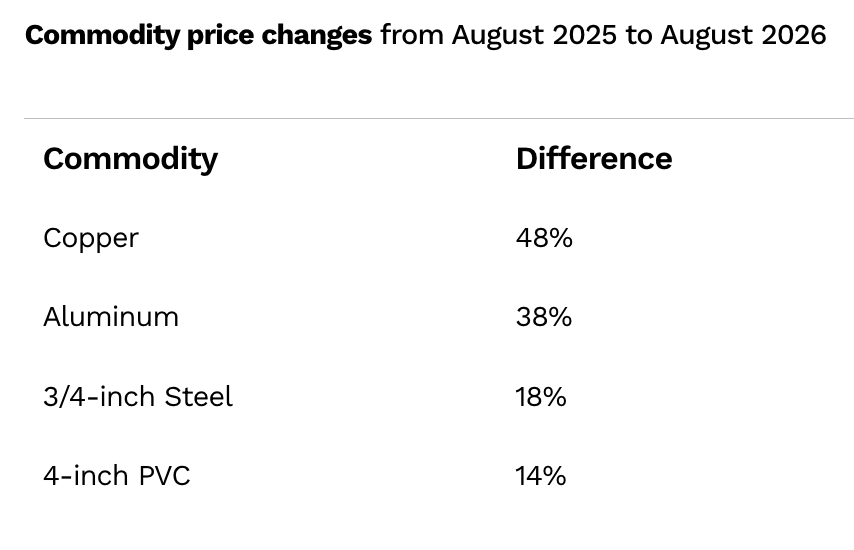

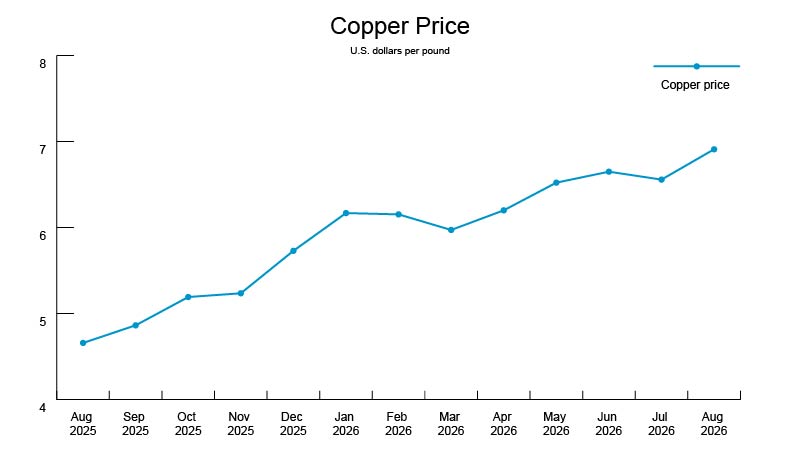
Anticipation of copper tariff expansion brings prices to a record high
The prospect of copper’s U.S. Section 232 tariff expanding to include refined copper, such as cathode, continues to increase prices. In early September, copper reached record highs on the London Metal Exchange.
Zoom in: Benchmark three-month futures gained as much as 0.8% to above $14,530 per ton, surpassing the previous record high set in January. This morning, copper opened at $6.55 per pound on COMEX.
Why it matters: While there is currently no global shortage, anticipation of this tariff expansion continues to bring shipments to the United States while depleting inventories in other exchanges.
Total inventories rose by 20,718 metric tons in August.
- COMEX rose 38,749 metric tons. Inventories have climbed for 46 straight days since the end of August.
- The London Metal Exchange fell 21,125 metric tons.
Meanwhile, prices jumped 48% year over year. The year-to-date copper average for 2026 is $6.09, compared to a $4.82 average in 2025.
High prices benefit major miners, but operational challenges still persist, with Chile’s copper export revenues falling to their lowest in more than a year in August. Analysts say a tighter future market balance is expected to support higher prices.

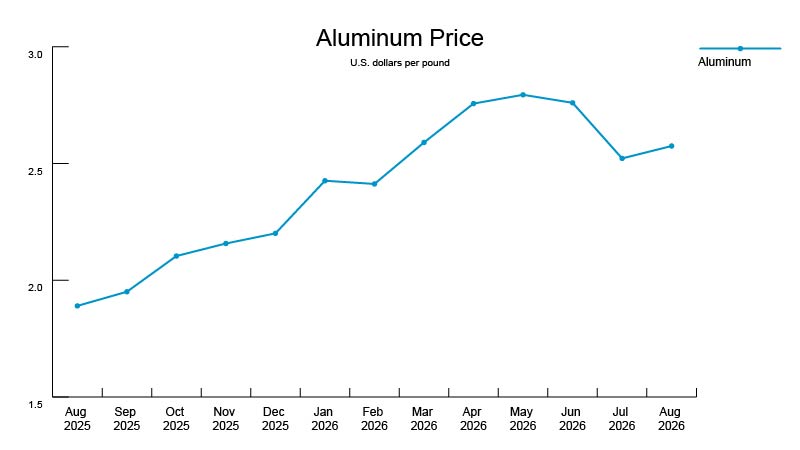
Trade tensions renew between the United States and Canada
Trade talks between the United States and Canada fell through August 21, resulting in an additional U.S. 50% tariff on certain Canadian goods taking effect the next day.
In response, Canada imposed “dollar-for-dollar” reciprocal tariffs ranging from 15% to 50% on U.S. goods, including steel and aluminum products, appliances and electronics, which took effect September 8.
Zoom in: Steel and aluminum products from the United States face a 50% tariff. Existing counter-tariffs on U.S. goods remain, including 25% on automobiles.
By the numbers: Year over year, aluminum prices jumped 38%, with the year-to-date average price at $2.60. Today, aluminum opened at $2.61 per pound.
Why it matters: The United States has had only four operating smelters in the past 26 years, making it reliant on imports primarily from Canada. More than half of the aluminum the United States consumes to meet demand is from Canada. New domestic smelting capacity will take years to develop, as it requires significant investment, long-term power contracts and environmental approvals.
The big picture: The renewed trade tensions hint at the future of the U.S.-Mexico-Canada Agreement.

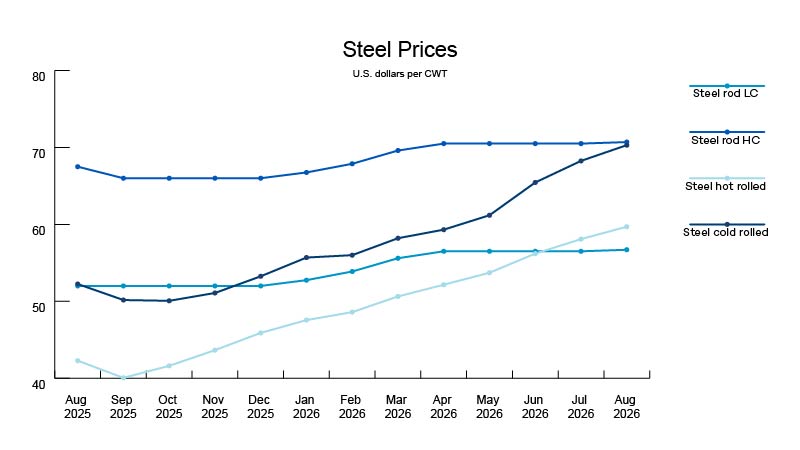
Steel suppliers start the month with a price increase
Vendors imposed a price increase at the beginning of the month and report extended lead times of approximately six to eight weeks across all steel pipe product categories.
What’s behind it: These are driven by high demand for hyperscale projects, such as data centers, increasing lead times and costs.
The big picture: According to the Institute for Supply Management, manufacturers surveyed continue to cite tariff-related cost pressures and rising energy costs as key challenges.
The bottom line: Regardless of market constraints, demand remains consistent, with quoting activity high for large-scale projects.

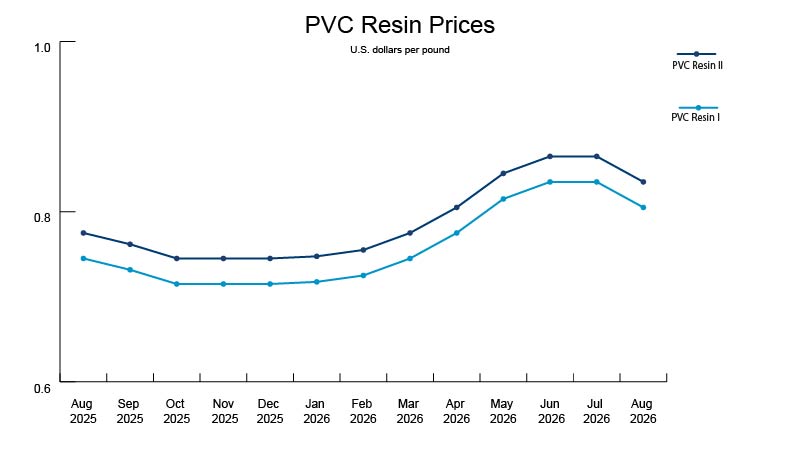
PVC price increases hold
Suppliers began September with price increases across all PVC pipe sizes.
Why it matters: September marks the second month price increases have held, driven by demand for hyperscale projects, primarily for large-diameter pipes.
By the numbers: Lead times on two-inch diameter and smaller face a four- to six-week timeline, while larger-diameter pipe and special radius bends face extended lead times of eight to 10 weeks.
The big picture: September is also the peak month of the Atlantic hurricane season. Price increases could continue if a hurricane makes landfall on the mainland United States; however, the latest tropical storm earlier this month weakened into a depression, causing heavy rain and winds along the Gulf Coast.
News Roundup
The Federal Reserve is widely expected to vote to increase interest rates at its next meeting Tuesday, September 15, and Wednesday, September 16, following data releases on key metrics, including a higher-than-expected job report from August and the rise in inflation concerns from the latest consumer price index.
Tagged with Biggest News, Border States, commodities, supply chain