




CHARLESTON, S.C., November 17, 2026 — Sonepar has published the following data center supply chain update:
 1. Election impact
The election results have shifted speculation towards more regulation of data centers, which could slow future approvals.
The flip side: Lower demand could reduce pressure on supply and thereby decrease lead times. However, any new regulation would not affect the multi-year backlog of already approved projects, so the impact would be delayed.
Copper prices began falling shortly before the election and remained low in the days that followed. Some analysts like TD Securities and Goldman Sachs have lowered their 2027 copper forecasts, though Deutsche Bank predicts a price surge in mid-2027 due to copper scarcity.
Copper is facing additional pressure from a rising US dollar as expectations of more aggressive Federal Reserve rate hikes continued to grow.
Spotlight on Copper: 2027 Shortage or Surplus?
Every year, copper forecasts disagree. Analysts warn of shortages, while we continue to have a surplus. Why? Short- and long-term forces are pulling in different directions.
- Short term: China accounts for more than half of global copper demand, and when prices climb too high, Chinese buying drops. This cycle typically plays out two to three times a year (see this January 2026 article on the vanishing demand effect)
- Long term: The fundamentals point to tight supply driven by declining ore quality at mines, long mine development timelines, and underinvestment. Demand will remain high due to electrification, AI infrastructure and grid modernization.
 2. Where lead times are headed
Lead times have held steady since our last update but are expected to worsen in 2027.
Tariff volatility is likely to continue: Recent court rulings have limited some tariffs, and the administration has since pursued other legal avenues to put tariffs in place. This ongoing cycle of changes keeps the outlook uncertain, and it is likely to continue regardless of the election results.
Aluminum is currently stable, but its future is unclear: Any change in the U.S.-Iran conflict will affect aluminum. More than half of U.S. aluminum comes from Canada, so the resumption of trade talks with Canada could help, though they haven’t produced results yet.
Steel demand is still increasing, and supply will continue to be insufficient, pushing up lead times. Same for PVC.
Manufacturers are increasing medium-voltage (MV) cable production, but it’s already presold and factored into forecasts. If Congress introduces new regulations that slow approvals of data center projects, incoming capacity could catch up somewhat, potentially reducing MV cable lead times.
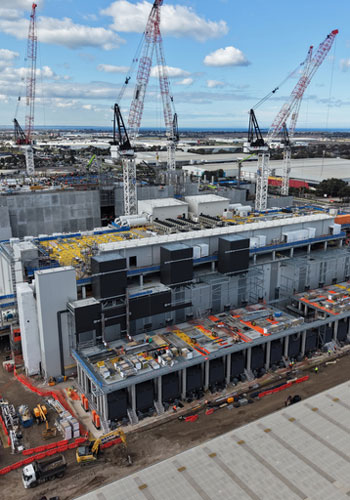 3. Strategies for reducing risk and avoiding delays
Hyperscaler and colocation builders who take these steps may see fewer surprises and better lead times:
Not waiting for the dust to settle. Tariff volatility is expected to continue, and the course of the U.S.-Iran conflict remains uncertain.
Ordering as soon as specs are known. With steel, PVC and MV cable lead times expected to worsen in 2027, it’s critical to move quickly. The sooner your contractor and distributor know your needs, the sooner orders can be placed.
Aligning release schedules around construction timelines. Challenge your distributor to help you identify critical equipment early, approve alternates that won’t sacrifice quality, and align release schedules with the construction timeline to avoid delays and liquidated damages. Deeper and earlier collaboration and transparency with partners throughout the supply chain can give earlier visibility into potential roadblocks.
Using storage and kitting services. Distributors are dedicating warehouse space to store owner-provided material and releasing it to the jobsite as needed. Storing material offsite keeps it secure and protected from the elements, while kitting in a controlled environment can free up contractor labor on the jobsite.
Using vendor-managed inventory (VMI) at the jobsite. Jobsite VMI that’s tailored to the project means the installation crews get access to the materials they use most often exactly when they need it. This helps prevent both shortages and excess inventory, so work keeps moving forward, on schedule.
Subscribe to receive future editions of Sonepar’s data center supply chain updates.
Looking for logistics and jobsite support from an experienced electrical distributor? Contact Sonepar’s data center team.
Sources to watch
- U.S. Dollar Index (DXY)
- CME group copper
- LME Aluminum
- LME aluminum Midwest premium
- CME US Midwest domestic hot rolled steel
- PPI electrical conduit and fittings, including plastic
- Tariff tracker: PIIE
- Tariff tracker: Atlantic Council
Tagged with data centers, Power Brief, Sonepar