






FARGO, N.D., July 13, 2026 — Border States has published the following commodity update.
Commodity Trends
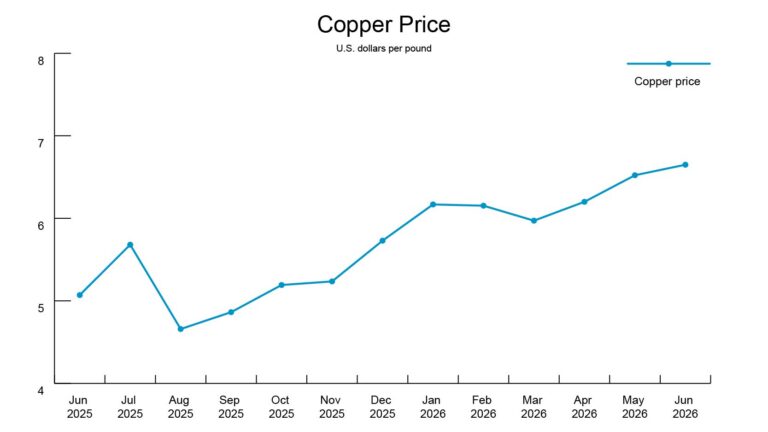
Copper suppliers announced a 7.5% price increase in early July
Copper futures were above $6.15 per pound in early July as the market monitors inflation, tariff policy and renewed tension in the Middle East.
Why it matters: Interest rates are climbing following the latest conflict in the Middle East. And commodities, like copper, benefit from lower rates, which boost economic activity and overall demand.
By the numbers: Copper suppliers announced a 7.5% increase on July 10. This morning, copper opened at $6.28 per pound.
Meanwhile, the copper concentrate market is struggling, with smelters facing collapsing treatment terms, and traders wait for a possible tariff on refined copper.
Zoom in: The June 30 deadline passed without the White House expanding copper’s Section 232 tariffs to refined copper, including cathodes, ores and concentrates.
Quick catch-up:
- In July 2025, President Trump announced a 50% tariff under Section 232 on semi-finished and derivative copper imports, excluding materials, such as cathodes.
- The secretary of commerce was advised to provide the president with an update on the state of the domestic copper market, including refining capacity, by June 30. This update could trigger a phased, universal import duty on copper cathodes, starting at 15% in 2027 and rising to 30% in 2028.
- President Trump has since revised tariffs on some copper derivative products under Section 232, but refined copper has been spared thus far.
Why it matters: Including refined copper in the Section 232 tariffs could lead to significant domestic price spikes on the COMEX.

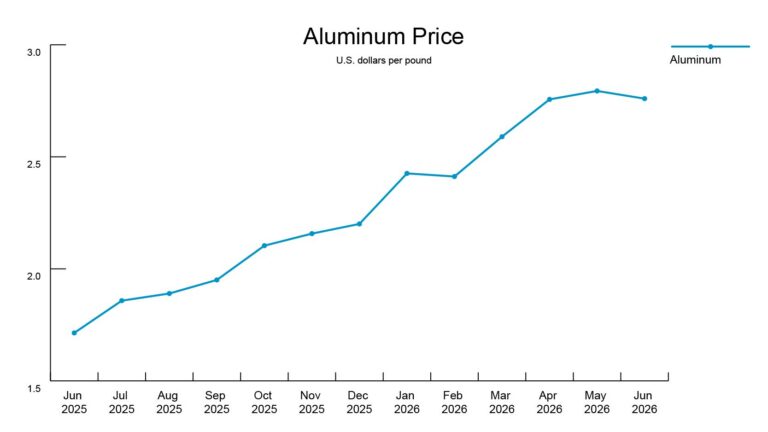
Aluminum’s rising production costs
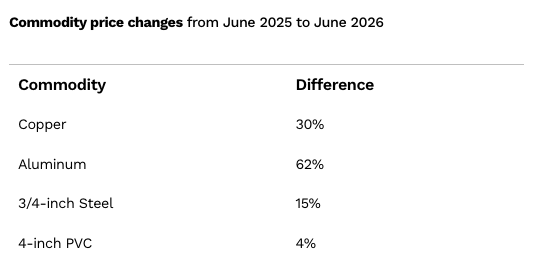
The Institute for Supply Management reported ongoing price increases for various goods in June, including aluminum, copper and electrical components, amid key shortages in electrical components, such as semiconductors.
Why it matters: Rising costs continue to challenge the manufacturing sector. Prices can rise quickly but be slow to come down. And additional costs, like transportation, add more strain; flatbed spot rates rose by more than 30% year over year in May, and contract rates increased 9% year over year, all while trucking capacity continues to tighten.
The big picture: Industries are also shifting from copper wire to aluminum wire due to record-high copper prices and its forecasted supply deficit.
Between the lines: Aluminum’s lower price per pound and comparable performance are driving its adoption, despite challenges, such as higher energy use, in its production. Today, aluminum opened at $2.53 per pound.
More aluminum news: Alcoa has agreed to acquire South32’s bauxite, alumina and aluminum assets across Australia, Brazil and South Africa in a deal valued up to $5.6 billion. Alcoa, one of the world’s largest aluminum producers, believes this move will improve scale and integration across its operations, reduce cost and help it meet forecast growth in long-term aluminum demand, despite China continuing to dominate global aluminum production.
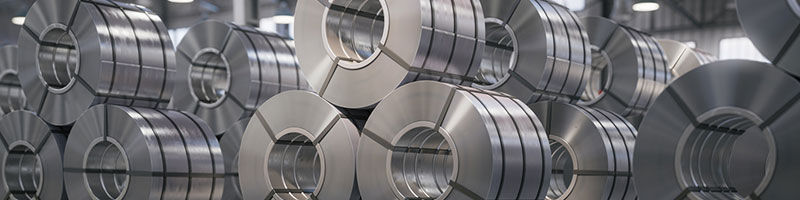
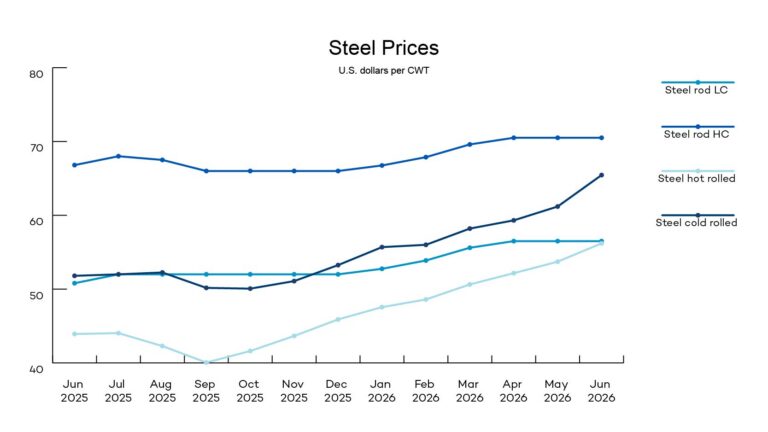
Steel pipe and fitting prices increased at the beginning of July
At the start of July, the prices for steel pipe increased by 3%–5% and steel fittings increased by 7%–10%.
Why it matters: Due to domestic competition for hyperscale projects heating up and the long production time for large-diameter pipes, lead times are reportedly being extended by approximately five to six weeks to meet demand.
Across the globe, the European Union began to limit tariff-free steel imports by 47% to 18.3 million metric tons July 1, with imports above that quota facing a higher 50% tariff in 26 categories of steel products.
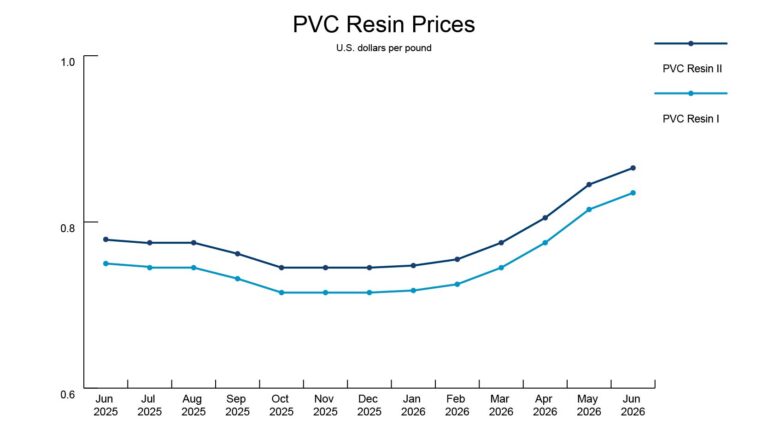
PVC prices enter July stable
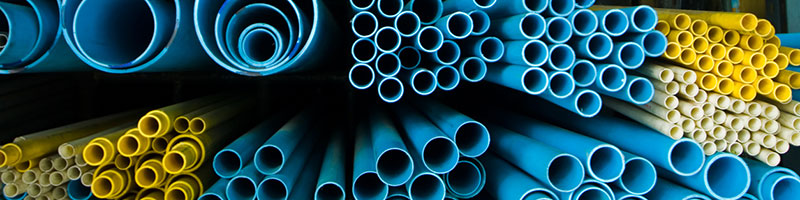
The PVC market started July with stable pricing just as seasonal demand from construction projects is peaking.
What they’re saying: Our vendor partners are reporting good stock levels on everything, aside from large diameter pipes and special radius bends.
By the numbers: Lead times for large-diameter and special-radius bends are five to 10 weeks and two to four weeks for 4-inch diameter and smaller.
News Roundup
The Fed voted to hold interest rates steady in June, keeping the benchmark rate between 3.5% and 3.75%. At a conference in early July, Fed Chair Kevin Warsh said inflation risks had decreased, indicating the Fed’s commitment to maintaining inflation below its 2% target. The Fed will meet again Tuesday, July 28, and Wednesday, July 29.
Tagged with Border States, Commodity