



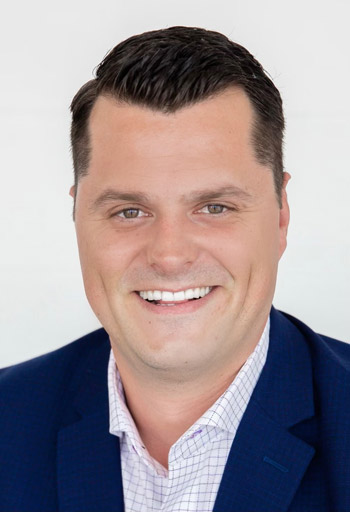
 Jordan Lomheim, Rexel USA’s Senior Vice President and Chief Strategy Officer, answered a series of questions for tED magazine about M&A activity, overall strategy for 2026, and the data center and AI outlook.
In part one of this three-part series, Lomheim talked about how Rexel is approaching its M&A activity.
tED magazine: Jordan, you oversee a broad set of functions for Rexel USA, including strategy, digital, analytics, transformation, M&A, and integration. How do these different areas intersect to drive the company’s overall direction and competitive advantage?
Jordan Lomheim: They absolutely intersect. Building a stronger platform through operational excellence, powered by AI, advanced supply chain technology, and best-in-class change management, creates a far better landing spot for the companies we acquire.
One of the key questions we ask when evaluating M&A opportunities is, ‘Is Rexel USA the best owner for this business?’ If we can bring differentiated capabilities that truly enhance the acquired company, such as our digital investments, scale, capital, and expertise, we can create even more value.
Many of the change management practices we use during integrations are similar to those required for internal transformation projects, especially when it comes to training, managing process changes, and operating within a complex technology ecosystem.
We have learned that these elements are highly complementary. They create a flywheel effect: the better we operate and serve our customers, the stronger we become as acquirers. Ultimately, this approach allows Rexel USA to bring more to the table, all centered on creating value for our customers, associates, suppliers, and shareholders.
tED magazine: While M&A activity has been relatively quiet overall in the industry, Rexel USA has remained an active acquirer. What is it about Rexel’s approach that allows the company to pursue acquisitions consistently?
Lomheim: We dedicate significant time to deal sourcing by engaging with owners, suppliers, bankers, and consultants. At its core, this work is about building relationships where trust and credibility matter immensely.
We place a strong emphasis on maintaining our reputation as an organization that executes transactions and integrations exceptionally well, keeps its word, and puts people first. Our goal is always to be the acquirer of choice.
Even the experience of one associate, whether positive or negative, can influence the next deal. We are not perfect and we make mistakes, but our commitment is to fix them, be humble, and demonstrate ownership when we do. That mindset is a core value and has been a key reason for our success in 2025 despite the slowdown in deal activity.
As we move into 2026, we expect deal activity to accelerate. Our focus will remain disciplined and selective, partnering with companies that align with our strategy and share our values. What excites us most is the number of exceptional businesses in this industry that fit that profile.
tED magazine: What key forces are encouraging owners to sell today?
Lomheim: Great question. Succession is a key factor we see often. Owners wrestle with the desire to keep the business in the family, especially when many distributors have been around for 50, 80, or even 100 years. It is more than a financial decision; it is about legacy, family, and what is in the best long-term interest of their associates.
For family-owned businesses, making investments has always carried risk, even in traditional areas like inventory, hiring, or opening new branches. Now, with the added need for AI and technology to stay competitive, that risk feels even greater. These new investments can be significant and unfamiliar, and many owners hesitate to take on that level of commitment.
This challenge comes from the additional investment required beyond traditional spending. For example, an independent might pay around $1,000 per year for an AI tool for every $1 million in sales, while we pay closer to $100 for the same level of sales. Without scale, independents can often end up paying significantly more for the same technology.
Our size, people, and partnerships also allow us to customize and enhance technology in ways that fit the unique needs of our business. As more distributors deploy AI and create value, expectations from suppliers, customers, and associates will continue to grow. Distributors will need to find ways to make meaningful investments and customizations, which can be costly and risky. It is a tough position for many because staying competitive will mean spending much more.
tED magazine: How does Rexel ensure a smooth transition and integration, and provide clear career paths for employees who join the organization through acquisition?
Lomheim: Our first priority is choosing the right partners. As mentioned earlier, we always ask ourselves whether we are the best owners for a business. That question centers on culture and strategic fit. We look for companies with leaders we can collaborate with because we will make important decisions together about growth and investment, so alignment and partnership are critical.
Once we establish that fit, we follow a rigorous integration process that begins with what we call an integration thesis. This thesis serves as a playbook outlining how we will integrate the business, how we plan to grow it, the pivotal decisions, major trade-offs, and investments. We start this thinking before we even submit an offer. This approach ensures alignment with the acquired company’s management team and helps avoid surprises.
The thesis for Talley is different from Warshauer, Schwing, or Connectronics. Every deal has its own unique, curated playbook based on strategic objectives. This ensures Roger and the entire organization are aligned.
Beyond the process, we think deeply about the talent we are acquiring. Distribution is a people business. When we buy a distributor, we are not buying intellectual property, manufacturing sites, or software—we are acquiring talented people and relationships.
When you look at our regions, managers, and even Roger’s direct leadership team, many come from companies we have acquired. Matt Holt, our COO, started his career at Platt, for example. We have found that acquisitions are an excellent way to identify talent. The integration process itself creates an environment where we can spot high-potential individuals and help them grow within the organization.