





By Natasha Chortos, DarkSky
WATERBERG, Limpopo — DarkSky International is proud to announce the designation of Lapalala Wilderness Nature Reserve as an International Dark Sky Park, making it the first DarkSky Park in South Africa. Lapalala joins a small but growing community of Dark Sky Places on the African continent, including !Ae!Hai Kalahari Heritage Park (International Dark Sky Sanctuary, South Africa) and NamibRand Nature Reserve (International Dark Sky Reserve, Namibia).
Located within the UNESCO Waterberg Biosphere Reserve in Limpopo Province, Lapalala is celebrated for its extraordinary biodiversity, commitment to conservation, environmental education, and now, its remarkable efforts to protect its dark skies. Guided by its vision of an “Exceptional Conservation Legacy,” Lapalala Wilderness Nature Reserve celebrates this certification as a meaningful milestone in its journey of environmental stewardship.
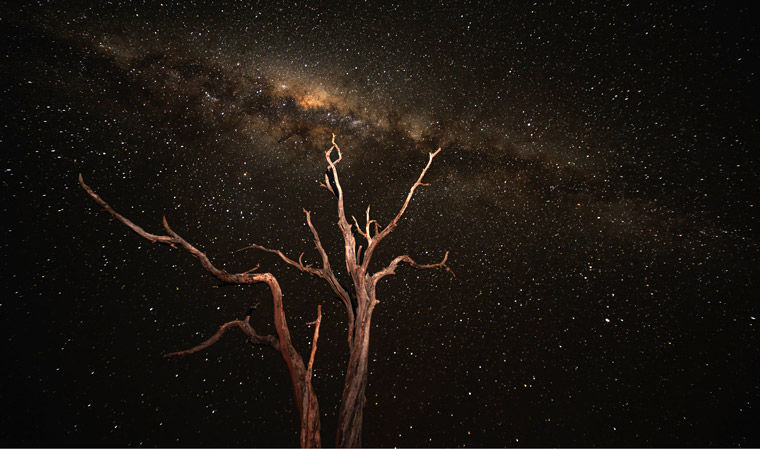
Spanning more than 48,000 hectares (480 sq km), Lapalala is a sanctuary for some of Africa’s most iconic and threatened species, including critically endangered black rhinoceros, white rhinoceros, African wild dog, and pangolin, alongside lions, leopards, cheetahs, roan antelope, and many others. Lapalala Wilderness Nature Reserve is also home to many smaller creatures who rely on dark skies, like dung beetles and migratory birds, including the Woodland Kingfisher, which travels the skies at night. Its open savannas and rugged river valleys are among the few truly dark places remaining in northern South Africa, with average Sky Quality Meter readings of 21.41 magnitudes per square arcsecond—well above the threshold to be considered for Dark Sky Park status.
This certification required Lapalala’s management, along with Lepogo Lodges and its reserve custodians, to embark on a multi-year project. The process began with a full external lighting inventory and audit of more than 1,700 fixtures, followed by the replacement or modification of lights to reduce glare, light trespass, and skyglow. A comprehensive Light Management Plan was then implemented to guide all future lighting decisions on the path to full compliance. Shielded fixtures, warm-color temperature bulbs, and guidance on where and when lights can be used are now standard across the property. Lapalala has also committed to ongoing night sky quality monitoring to ensure the continued protection of its exceptional dark skies.
“Lapalala Wilderness Nature Reserve has shown what’s possible when the conservation, community, and dark sky protection unite,” said Amber Harrision, DarkSky Places Program Manager. “By working closely with site custodians and the Lapalala Wilderness School, they’ve created a model where education, astrotourism, and conservation go hand-in-hand. Their efforts invite people to connect with the stars while safeguarding the natural and cultural heritage that makes the reserve extraordinary.”
Lapalala’s efforts extend well beyond lighting upgrades. The reserve has integrated dark sky protection into its environmental management policies, development guidelines, and building standards—ensuring that every new lodge, research infrastructure, and other facilities meet the strict criteria to minimize light pollution. This holistic approach protects nocturnal wildlife behavior, increases human safety, preserves the area’s wilderness character, and safeguards cultural traditions linked to the stars.
Lapalala is also weaving night sky conservation into its visitor experiences and education programs. The Lapalala Wilderness School engages thousands of learners annually through their environmental initatives, including stargazing activities, cultural storytelling, and lessons on light pollution. Lepogo lodges offer guided night drives, astronomy experiences, and “sleepout” under-the-stars adventures, all designed to connect guests with the wonder of the African night while raising awareness of its fragility.
The designation comes as South Africa launches its National Astro-Tourism Strategy, which hopes to position the country as a global leader in nighttime travel experiences. With astro-tourism growing worldwide, Lapalala’s achievement showcases how responsible tourism can protect both wildlife and the night sky while supporting local economies.
About the International Dark Sky Places Program:
Founded in 2001, the International Dark Sky Places Program is a non-regulatory and voluntary program encouraging communities, parks, and protected areas worldwide to preserve and protect dark sites through effective lighting policies, environmentally responsible outdoor lighting, and public education. When used indiscriminately, artificial light can disrupt ecosystems, impact human health, waste money and energy, contribute to climate change, and block our view and connection to the universe. Lapalala Wilderness Nature Reserve now becomes the 250th Dark Sky Place, joining 249 other Places that have demonstrated robust community support for dark sky advocacy and strive to protect the night from light pollution. Learn more by visiting https://darksky.org/what-we-do/international-dark-sky-places/.
About DarkSky International:
The mission of DarkSky is to preserve and protect the nighttime environment and our heritage of dark skies through environmentally responsible outdoor lighting. Learn more at darksky.org.
Tagged with DarkSky